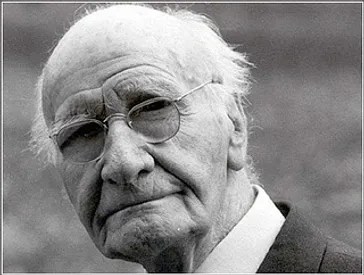
Outline of “A History of Philosophy, Volume 1: Greece and Rome” by Frederick Copleston, S.J.

Copleston History of Philosophy, Volume 1: Greece and Rome

To purchase this classic book follow this link.

Outline (This is an attempt to present the outline which Copleston gives within this work – feel free to request Word doc version of this outline). The autonumbering is messed up, and I’m not sure how I can fix it without destroying my soul… Here is a link to a PDF copy without the auto number confusion… Copleston, HoP, Vol 1 – Outline

You can use this for whatever purpose you like, though a thank you is always appreciated. I did this for my own sake while reading it, first of all, and share it for whatever benefit anyone may derive for any purpose whatsoever.


Chapter I – Introduction

1)          Why Study the History of Philosophy?

i) Knowledge of history is necessary for ‘education’ – Philosophers are key contributors to European thought and culture.

ii) Knowledge of the History of Philosophy will help us avoid the mistakes of our predecessors

iii)         Studying the history of philosophy will enable us to be attentive to developments within it.

2)          Nature of the History of Philosophy

i) No philosophy can be understood unless it is seen in its historical setting and in light of its connection with other systems.

ii) Observation of logical sequence in development.

iii) Progression points ‘beyond itself’ to Truth.

iv) Copleston adheres to the conviction that there is a philosophia perennis.

3)          How to Study the History of Philosophy

i) See any philosophical system in its historical setting and connections.

ii) Study philosophers ‘sympathetically’.

iii)         Understand words, phrases and shades of meaning.

4)          Ancient Philosophy (this volume)

PART I – PRE-SOCRATIC PHILOSOPHY Continue reading “Outline of “A History of Philosophy, Volume 1: Greece and Rome” by Frederick Copleston, S.J.”
The Trinitarian anthropology of St. Augustine

“Who can understand the omnipotent Trinity? We all speak of it, though we may not speak of it as it truly is, for rarely does a soul know what it is saying when it speaks of the Trinity. People wrangle and dispute about it, but it is a vision that is given to none unless they are at peace. There are three things, all found in a person , which I should like people to consider. They are far different from the Trinity, but I suggest them as a subject for mental exercise by which we can test ourselves and realize how great this different is. The three things are existence, knowledge, and will, for I can say that I am, I know, and I will. I am a being which knows and wills; I know both that I am and that I will; and I will both to be and to know. In these three–being, knowledge, and will–there is one inseparable life, one life, one mind, one essence; and therefore, although they are distinct from one another, the distinction does not separate them” (Augustine, Confessions, XIII, 11).

Humanity as the unity between the physical and spiritual realms (methorios in Maximus the Confessor and the fall of all creation).

[Question: why the apparently necessary connection between human moral failure (in the Garden of Eden) and so-called ‘natural evil’ (i.e., tsunamis and cholera)?  Here David Bentley Hart touches on an often overlook aspect of patristic theological anthropology which explains this necessary connection].

“Nevertheless, and disturbing as it may be, it is clearly the case that that there is a kind of “provisional’ cosmic dualism within the New Testament: not an ultimate dualism, of course, between two equal principles, but certainly a conflict between a sphere of created autonomy that strives against God on the one hand and the saving love of God in time on the other. It is a patristic notion (developed with extraordinary profundity by Maximus the Confessor) that humanity was created as the methorios (the boundary or frontier) between the physical and the spiritual realms, or as the priesthood of creation that unites earth to heaven, and that thus, in the fall of man, all of material existence was made subject to the dominion of death” (David Bentley Hart, The Doors of the Sea, pgs 62-63).

Josef Pieper – The meaning of life, according to Plato

To purchase this excellent and thoughtful little book click this link.

“I wish to sum up Plato’s stance [regarding the meaning of human existence] in three brief statements:

The First Statement: To perceive, as much as possible, all things as they really are and to live and act according to this truth (truth, indeed, not as something abstract and “floating in thin air” but as the unveiling of reality)–in this consists the good of man; in this consists a meaningful human existence.

The Second Statement: All men are nurtured, first and foremost, by the truth, not only those who search for knowledge–the scientists and the philosophers. Everybody who yearns to live as a true human being depends on this nourishment. Even society as such is sustained by the truth publicly proclaimed and upheld.

The Third Statement: The natural habitat of truth is found in interpersonal communication. Truth lives in dialogue, in discussion, in conversation–it resides, therefore, in language, in the word. Consequently, the well-ordered human existence, including especially its social dimension, is essentially based on the well-ordered language employed. A well-ordered language here does not primarily mean its formal perfection, even though I tend to agree with Karl Kraus when he says that every correctly placed comma is decisive. No, a language is well ordered when its words express reality with as little distortion and as little omission as possible.”

Pieper, Josef. Abuse of Language, Abuse of Power. San Francisco, CA: Ignatius, 1992. 35-26. Print.

Sophistry, propaganda, and the drowning out of Truth and Reality

“It is entirely possible that the true and authentic reality is being drowned out by the countless superficial information bits noisily and breathlessly presented in propaganda fashion. Consequently, one may be entirely knowledgeable about a thousand details and nevertheless, because of ignorance regarding the core of the matter, remain without basic insight. This is a phenomenon in itself already quite astonishing and disturbing. Arnold Gehlen labeled it “a fundament ignorance, created by technology and nourished by information”. But, I wanted to say, something for more discouraging is readily conceivable as well: the place of authentic reality is taken over by a fictitious reality; my perception is indeed still directed toward an object, but now it is a pseudoreality, deceptively appearing as being real, so much so that it becomes almost impossible any more to discern the truth.”

Pieper, Josef. Abuse of Language, Abuse of Power. San Francisco, CA: Ignatius, 1992. 33-34. Print.

Rest

“On the seventh day God finished his work which he had done and he rested” Genesis 2.2

The first issue involving New Media and Christian holiness is that of rest. The Lord created the heavens and the earth. After that, he rested. The act of creation (space, time, and the ordered matter within it) was an act of divine love. God did not need to create anything in order to add to his own holiness and perfection. However, from all eternity God rested.[i] Being at rest, in other words, is an intrinsic part of his nature. Being a creator was an act of gratuitous love. The fact that creation and rest are the first two things revealed to us about God means they are fundamental to how we are to understand him. At the beginning and centre of the act of creating everything, there is a God who rests. After creating he returns to rest, and invites all that he has created to join him in it.

Continue reading “Rest”

What is Holiness?

“You shall be holy to me, for I the Lord am holy and have separated you from the peoples, that you should be mine.” Leviticus 20.26

 [I genuinely wish that great minds from the past were alive now to consider these things. I believe the Church needs an Aquinas, Kierkegaard, Augustine or even a CS Lewis or Chesterton, to think and write about all of this… In the meantime, I want to try and get my mind around some things, so far as I am able, for my own benefit, and for those to whom and with whom I minister…]

Holiness is a vast and well-explored topic, yet often it seems to be misunderstood. What ought to be a glorious and beautiful reality is often mired in preconceived notions of mere religious observance and legalism. To be holy is often confused with ‘living in accordance with Christian values’, or merely ‘doing good things’. A basic definition of holiness is needed for the purpose of this site. It will also put into clearer focus as to why I’m bothering to consider holiness in relation to New Media.

Holiness, simply understood, is the setting aside or devoting of things and actions for some purpose (whether that purpose is oriented towards some deity, or is of local cultural or community importance). For the human being this has involved many forms of worship in all sorts of different religions, and non-theistic worldviews, down through the millennia.[i]

For the Christian, however, holiness is understood primarily in terms of ‘being’. Ontology is the technical word for it, and it is something that Christian theology, philosophy, and any proper understanding of holiness needs to regard as a starting point.

We are commanded to ‘be holy’ because God ‘isholy’. There is a Greek philosopher named Christos Yannaras who has written much about this from an eastern Christian perspective. If we think ‘holiness’ is about conduct that favourably measures up to certain ideals established within a particular religion, this may actually be an evasion of the truth of who we are and how we are to be in the world.[ii] First of all, we need to consider who God is, and then what sort of being we are, as created in his image. Once we have some idea regarding the first two considerations we can think about conduct. However, the initial considerations open up upon vistas of their own. In asking what sort of being a human is, we must ask why we exist at all? What sort of dignity was bestowed upon us in the first place? Is this dignity a gift unrevoked? Is the dignity an ultimate expectation? How did we bring ruin upon ourselves? How does that ruin affect us individually and as a species? What did the Lord do for us in order to restore to us our dignity? These questions about our own being lead us inevitably to questions about ultimate reality, and the source of being. From whom is this gift and mystery of being derived? How does creation relate to God? Who is this God to whom the whole of creation is oriented, ourselves included? What is the final purpose of humanity and creation? An understanding of what holiness is must include these questions.

Continue reading “What is Holiness?”

Curiositas killed the New Media cat

Curiosity, a desire to learn and discover new things, is a good and necessary part of what it means to be a healthy and active human being. However, if a person is spiritually sick (because of their own actions or the actions of others) this good impulse can become warped and symptomatic of a troubled soul. Ancient and medieval philosophers, mystics, pastors, and theologians gave a lot of thought to diagnosing spiritual ailments and prescribing appropriate treatment for those ailments in the form of spiritual discipline. One philosopher named Josef Pieper is almost unmatched in his ability to distill this ancient and medieval wisdom and present it fresh to the modern world.

 Josef Pieper died in 1997 at the ripe old age of 93. New Media would doubtless have been known to him, though it had not yet begun to dominate late-modern life as it now has. However, what he writes seems to anticipate some of the issues that New Media has exasperated in human souls. It seems that New Media, may act as a kind of stimulant for spiritual struggles which have always afflicted Adam’s helpless race in varying degrees.

Pieper outlines a particular kind of spiritual illness which is called accidie, or acedia (Faith, Hope, Love, pp 120-121). Accidie is normally (and unfortunately) translated ‘sloth’. It is regarded as one of the Seven Capital Sins (often referred to as the Seven Deadly Sins – also a misnomer). It is more accurate to understand accidie as a ‘sorrow of the world’ (2 Corinthians 7:10), existential listlessness, a kind of wrath turned inward on the self (shown vividly in Dante’s Inferno, canto 7). Accidie will come up again and again in New Media Holiness, but for now I want to focus upon a couple of the by-products, or symptoms, of accidie. Continue reading “Curiositas killed the New Media cat”

Yannaras and morality as an evasion of Being

“If we accept morality simply as man’s conformity to an authoritative [supreme, infallible, Divine] or conventional [socially constructed, utilitarian] code of law, then ethics becomes man’s alibi for his existential problem. He takes refuge in ethics, whether religious, philosophical or even political, and hides the tragedy of his mortal, biological existence behind idealized and fabulous objective aims. He wears a mask of behavior borrowed from ideological or party authorities, so as to be safe from his own self and the questions with which it confronts him” (Christos Yannaras, The Freedom of Morality, p15).

Stranger Things and the difference between virtual and physical RPGs

I have been watching Stranger Things on Netflix, and thus far I love the show (for a few reasons I won’t get into here – I will only add that I’ve been successfully able to watch it occasionally rather than clothing myself in athletic gear, and watching the whole thing in one night). One thing about the show got me thinking. There is a scene at the beginning of the first episode in which the young boys are playing a Role Playing Game (Dungeons and Dragons, I believe). I played the same game (RPG) for a little while in grade 7. I stopped playing in part because I noticed even then that the game had become an obsession for me (for whatever reason I think I may tend towards obsessing about things that interest me, rather than being able to moderate my participation and enjoyment). Even so, the obsession I had with playing an RPG in grade 7 was moderated by a few things.

As a kid I had to work hard at feeding my obsession with RPGs because of the basic creaturely constraints of space and time. In Stranger Things we see how the mother of one of the characters operates as a moderating influence. She has an eye on the clock. She intervenes. When they physically disperse, the game stops. They go to their homes (or not). They eat. They go to school. They need to plan to play again. The planning itself takes time for preparation. Physical RPGs involve real-world interaction between individuals who are immersed in a narrative by way of a story teller. The games are themselves tactile, with dice and paper at least, along with your own ‘I don’t want to shower today mom’ grime and smell.


There is a vast array of RPGs in New Media and some of them are massive (they are actually called MMORPGs – or for the uninitiated Massively Multi-player Online Role Playing Games). The online form of these games means the basic creaturely constraints of space and time are negated or absent entirely. Physical community is unnecessary in order for the game to work. Our primal biological and typical way of gathering as a community of human beings for entertainment has been short-circuited by instant access to the internet wherever we are, and at any time. As a teacher at an inner-city high school in London, I could notice how World of Warcraft (for example) was having a detrimental effect on some of my students. The obsession of the game could be indulged almost seamlessly around mealtime, bedtime and home-work (if that happened). My guess is that some of the young people exerted influence on the family dynamics in order to play more, taking supper into their rooms, and spending more and more time closed away from the other members of their family. Admittedly for some of them the game was a relief from certain harsh realities.

I think it is worth thinking about space and time in general as we consider New Media. How can we  engage with New Media in, at least, a benign way if not a positive way? It has been my observation that immersion into such games comes at the expense of looking after your body and letting your mind rest. It has a detrimental impact on all other areas of your life. I think for those people who can play MMORPGs for a little while (say 3 hours once per week) there is much enjoyment to be had. It would be not so different than watching a movie. However, I think that many of these games are intentional about making it difficult to detach and do other things. Without the basic creaturely constraints, our minds are at risk of being altered and artificially stimulated to obsess in a way that does not necessarily involve the other aspects of our lives (physical interaction with other humans, the feeling of warm sunlight on our skin, showering, eating, sleeping…). Something of primal importance for us is being lost, or at least marginalized, namely story-telling and community, not to mention actual physical adventures in the forest on our bikes.

Continue reading “Stranger Things and the difference between virtual and physical RPGs”