
“Atheist means, for Plato, first and foremost the man who denies the operation of Reason in the world.”
Copleston, Frederick Charles. A History of Philosophy: Volume 1. Garden City, NY: Image, 1962. 191. Print.
“Atheist means, for Plato, first and foremost the man who denies the operation of Reason in the world.”
Copleston, Frederick Charles. A History of Philosophy: Volume 1. Garden City, NY: Image, 1962. 191. Print.
“Language is primarily designed to refer to the objects of our sense-experience, and is very often found inadequate for the precise expression of metaphysical truths. Thus we speak, and cannot well help speaking, of “God foreseeing,” a phrase that, as it stands, implies that God is in time, whereas we know that God is not in time but is eternal. We cannot, however, speak adequately of the eternity of God, since we have no experience of eternity ourselves, and our language is not designed to express such matters. We are human beings and have to use human language — we can use no other: and this fact should make us cautious in attaching too much weight to the mere language or phrases used by Plato in dealing with abstruse, metaphysical points.”
Copleston, Frederick Charles. A History of Philosophy: Volume 1. Garden City, NY: Image, 1962. 165. Print.
“You shall be holy to me, for I the Lord am holy and have separated you from the peoples, that you should be mine.” Leviticus 20.26
[I genuinely wish that great minds from the past were alive now to consider these things. I believe the Church needs an Aquinas, Kierkegaard, Augustine or even a CS Lewis or Chesterton, to think and write about all of this… In the meantime, I want to try and get my mind around some things, so far as I am able, for my own benefit, and for those to whom and with whom I minister…]
Holiness is a vast and well-explored topic, yet often it seems to be misunderstood. What ought to be a glorious and beautiful reality is often mired in preconceived notions of mere religious observance and legalism. To be holy is often confused with ‘living in accordance with Christian values’, or merely ‘doing good things’. A basic definition of holiness is needed for the purpose of this site. It will also put into clearer focus as to why I’m bothering to consider holiness in relation to New Media.
Holiness, simply understood, is the setting aside or devoting of things and actions for some purpose (whether that purpose is oriented towards some deity, or is of local cultural or community importance). For the human being this has involved many forms of worship in all sorts of different religions, and non-theistic worldviews, down through the millennia.[i]
For the Christian, however, holiness is understood primarily in terms of ‘being’. Ontology is the technical word for it, and it is something that Christian theology, philosophy, and any proper understanding of holiness needs to regard as a starting point.
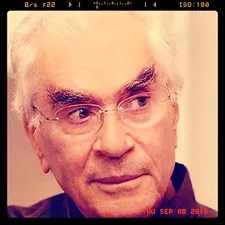
We are commanded to ‘be holy’ because God ‘isholy’. There is a Greek philosopher named Christos Yannaras who has written much about this from an eastern Christian perspective. If we think ‘holiness’ is about conduct that favourably measures up to certain ideals established within a particular religion, this may actually be an evasion of the truth of who we are and how we are to be in the world.[ii] First of all, we need to consider who God is, and then what sort of being we are, as created in his image. Once we have some idea regarding the first two considerations we can think about conduct. However, the initial considerations open up upon vistas of their own. In asking what sort of being a human is, we must ask why we exist at all? What sort of dignity was bestowed upon us in the first place? Is this dignity a gift unrevoked? Is the dignity an ultimate expectation? How did we bring ruin upon ourselves? How does that ruin affect us individually and as a species? What did the Lord do for us in order to restore to us our dignity? These questions about our own being lead us inevitably to questions about ultimate reality, and the source of being. From whom is this gift and mystery of being derived? How does creation relate to God? Who is this God to whom the whole of creation is oriented, ourselves included? What is the final purpose of humanity and creation? An understanding of what holiness is must include these questions.
Curiosity, a desire to learn and discover new things, is a good and necessary part of what it means to be a healthy and active human being. However, if a person is spiritually sick (because of their own actions or the actions of others) this good impulse can become warped and symptomatic of a troubled soul. Ancient and medieval philosophers, mystics, pastors, and theologians gave a lot of thought to diagnosing spiritual ailments and prescribing appropriate treatment for those ailments in the form of spiritual discipline. One philosopher named Josef Pieper is almost unmatched in his ability to distill this ancient and medieval wisdom and present it fresh to the modern world.
Josef Pieper died in 1997 at the ripe old age of 93. New Media would doubtless have been known to him, though it had not yet begun to dominate late-modern life as it now has. However, what he writes seems to anticipate some of the issues that New Media has exasperated in human souls. It seems that New Media, may act as a kind of stimulant for spiritual struggles which have always afflicted Adam’s helpless race in varying degrees.
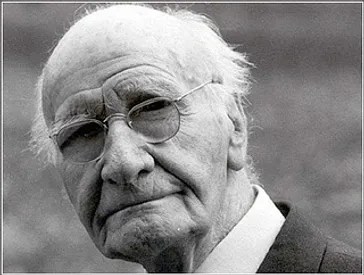
Pieper outlines a particular kind of spiritual illness which is called accidie, or acedia (Faith, Hope, Love, pp 120-121). Accidie is normally (and unfortunately) translated ‘sloth’. It is regarded as one of the Seven Capital Sins (often referred to as the Seven Deadly Sins – also a misnomer). It is more accurate to understand accidie as a ‘sorrow of the world’ (2 Corinthians 7:10), existential listlessness, a kind of wrath turned inward on the self (shown vividly in Dante’s Inferno, canto 7). Accidie will come up again and again in New Media Holiness, but for now I want to focus upon a couple of the by-products, or symptoms, of accidie. Continue reading “Curiositas killed the New Media cat”
“As a technical term, hypostasis is found first in the Greek natural sciences, meaning sediment in a liquid. Behind this is a twofold idea, solidification and visibility, which appears in every use of the word, with one aspect or the other predominating. Thus in the Greek Bible, hypostasis refers in particular to true reality (see Heb 1:3; 3:14; 11:1); the Stoic tradition sees in the hypostasis the last individualization of the primordial essence; it is likewise present in Neoplatonic tradition, i.e., from Porphyry on–not yet in Plotinus–though on an entirely spiritual level and with a nuance of progression. The same is true for the technical use of the term which the Christian authors employ–always confronting the three traditions mentioned–in trinitarian theology and then in christology. Taken up by the Origenian tradition, just as ousia in order to emphasize the three divine realities in an anti-Sabellian way, hypostasis found a more ample consensus in the Synod of Alexandria (362). The Cappadocians, who contrasted the three hypostases with the one nature, the formula sanctioned also by the Council of Constantinople (381), nevertheless explained the term by emphasizing its characteristic aspect, individuality. Based on the new interpretation of the concept of hypostasis, Basil, and later Cyril of Alexandria, compared the trinitarian usage with the Porphyrian doctrine of the three hypostases. In the same period, Apollinaris of Laodicea introduced the term in christology, emphasizing by it the one reality of Christ. Hypostasis with this meaning became prominent through Cyril of Alexandria. Clearly distinguished from “nature,” it entered also into the faith of Chalcedon (DS 302). Nevertheless, in later discussions, in which there was an awareness that both of the natures in Christ, as Nestorius had intended, must be hypostatic, i.e., individual, the Byzantine authors emphasized in the hypostasis the aspect of subsistence, as well as that of characterizing property, so as to be able to use the term justly in both trinitarian theology and christology” (B. Studer, Encyclopedia of Ancient Christianity, vol 2, p. 308).
“If we accept morality simply as man’s conformity to an authoritative [supreme, infallible, Divine] or conventional [socially constructed, utilitarian] code of law, then ethics becomes man’s alibi for his existential problem. He takes refuge in ethics, whether religious, philosophical or even political, and hides the tragedy of his mortal, biological existence behind idealized and fabulous objective aims. He wears a mask of behavior borrowed from ideological or party authorities, so as to be safe from his own self and the questions with which it confronts him” (Christos Yannaras, The Freedom of Morality, p15).
“Martin Heidegger (1889-1976) –a morally problematic figure, admittedly, but not to be dismissed–was largely correct in thinking that the modern West excels at evading the mystery of being precisely because its governing myth is one of practical mastery. Ours is, he thought, the age of technology, in which ontological questions have been vigorously expelled from cultural consideration, replaced by questions of mere mechanistic force; for us, nature is now something “enframed” and defined by a particular disposition of the will, the drive toward dominion that reduces the world to a morally neutral “standing reserve” of resources entirely subject to our manipulation, exploitation, and ambition. Anything that does not fit within the frame of that picture is simply invisible to us. When the world is seen this way, even organic life–even where consciousness is present–must come to be regarded as just another kind of technology. This vision of things can accommodate the prospect of large areas of ignorance yet to be vanquished (every empire longs to discover new worlds to conquer), but no realm of ultimate mystery. Late modernity is thus a condition of willful spiritual deafness. Enframed, racked, reduced to machinery, nature cannot speak unless spoken to, and then her answers must be only yes, no, or obedient silence. She cannot address us in her own voice. And we certainly cannot hear whatever voice might attempt to speak to us through her” (David Bentley Hart, The Experience of God, pp. 311-312).
“Much of what passes for debate between theist and atheist factions today is really only a disagreement between differing perspectives within a single post-Christian and effectively atheist understanding of the universe. Nature for most of us now is merely an immense machine, either produced by a demiurge (a cosmic magician) or somehow just existing of itself, as an independent contingency (a magical cosmos). In place of the classical philosophical problems that traditionally opened out upon the question of God–the mystery of being, higher forms of causality, the intelligibility of the world, the nature of consciousness, and so on–we now concern ourselves almost exclusively with the problems of the physical origin or structural complexity of nature, and are largely unaware of the difference.
The conceptual poverty of the disputes frequently defies exaggeration. On one side, it has become perfectly respectable for a philosophically illiterate physicist to proclaim that “science shows that God does not exist,” an assertion rather on the order of Yuri Gagarin remarking (as, happily, he never really did) that he had not seen God while in orbit. On the other side, it has become respectable to argue that one can find evidence of an Intelligent Designer of the world by isolating discrete instances of apparent causal discontinuity (or ineptitude) in the fabric of nature, which require the postulate of an external guiding hand to explain away the gap in natural causality. In either case, “God” has become the name of some special physical force or causal principle located somewhere out there among all the other forces and principles found in the universe: not the Logos filling and forming all things, not the infinity of being and consciousness in which all things necessarily subsist, but a thing among other things, an item among all the other items encompassed within nature” (David Bentley Hart, The Experience of God, pgs 302-303).
“”But what becomes of the non-elect?” You have nothing to do with this question, if you find yourself embarrassed or distressed by the consideration of it. Bless God for his electing love, and leave him to act as he pleases by them that are without. Simply acquiesce in the plain scripture account, and wish to see no farther than revelation holds the lamp. It is enough for you to know that the Judge of the whole earth will do right” (A. M. Toplady, The Doctrine of Absolute Predestination, pgs 18,19).
… On the incarnation being part of God’s divine plan from all eternity, irrespective of humanity’s primal disobedience.
“He who, by the sheer inclination of his will, established the beginning of all creation, seen and unseen, before all the ages and before that beginning of created beings, had an ineffably good plan for those creatures. The plan [even before the sin and fall] was for him to mingle, without change on his part, with the human nature by true hypostatic union, to unite human nature to himself while remaining immutable, so that he might become a man, as he alone knew how, and so that he might deify humanity in union with himself. Also, according to this plan, it is clear that God wisely divided “the ages” between those intended for God to become human, and those intended for humanity to become divine” (Maximus the Confessor, Ad Thalassium 22, as quoted in Harink’s commentary on 1 Peter, pg 40).
 Mind your Maker
You must be logged in to post a comment.