What is Holiness?

“You shall be holy to me, for I the Lord am holy and have separated you from the peoples, that you should be mine.” Leviticus 20.26

 [I genuinely wish that great minds from the past were alive now to consider these things. I believe the Church needs an Aquinas, Kierkegaard, Augustine or even a CS Lewis or Chesterton, to think and write about all of this… In the meantime, I want to try and get my mind around some things, so far as I am able, for my own benefit, and for those to whom and with whom I minister…]

Holiness is a vast and well-explored topic, yet often it seems to be misunderstood. What ought to be a glorious and beautiful reality is often mired in preconceived notions of mere religious observance and legalism. To be holy is often confused with ‘living in accordance with Christian values’, or merely ‘doing good things’. A basic definition of holiness is needed for the purpose of this site. It will also put into clearer focus as to why I’m bothering to consider holiness in relation to New Media.

Holiness, simply understood, is the setting aside or devoting of things and actions for some purpose (whether that purpose is oriented towards some deity, or is of local cultural or community importance). For the human being this has involved many forms of worship in all sorts of different religions, and non-theistic worldviews, down through the millennia.[i]

For the Christian, however, holiness is understood primarily in terms of ‘being’. Ontology is the technical word for it, and it is something that Christian theology, philosophy, and any proper understanding of holiness needs to regard as a starting point.
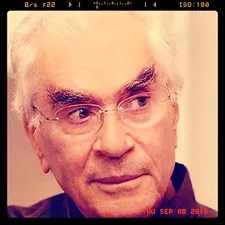
We are commanded to ‘be holy’ because God ‘isholy’. There is a Greek philosopher named Christos Yannaras who has written much about this from an eastern Christian perspective. If we think ‘holiness’ is about conduct that favourably measures up to certain ideals established within a particular religion, this may actually be an evasion of the truth of who we are and how we are to be in the world.[ii] First of all, we need to consider who God is, and then what sort of being we are, as created in his image. Once we have some idea regarding the first two considerations we can think about conduct. However, the initial considerations open up upon vistas of their own. In asking what sort of being a human is, we must ask why we exist at all? What sort of dignity was bestowed upon us in the first place? Is this dignity a gift unrevoked? Is the dignity an ultimate expectation? How did we bring ruin upon ourselves? How does that ruin affect us individually and as a species? What did the Lord do for us in order to restore to us our dignity? These questions about our own being lead us inevitably to questions about ultimate reality, and the source of being. From whom is this gift and mystery of being derived? How does creation relate to God? Who is this God to whom the whole of creation is oriented, ourselves included? What is the final purpose of humanity and creation? An understanding of what holiness is must include these questions.

Continue reading “What is Holiness?”

Evelyn Underhill on the Creed

“”Lord,” said St. Thomas Aquinas, “set my life in order; making me to know what I ought to do and do it in the way that I should.” The civilized world seems now to have reached the point at which only this prayer can save it; and the answer is already given us in the Christian creed. We talk much of reconstruction; but no one has yet dared to take the Christian’s profound beliefs about Reality as the basis of a reconditioned world. We treat them as dwellers in the plain treat the mountains. We lift up our eyes to their solemn beauty with respect; but refuse to acknowledge that plain and mountain are part of the same world. Yet the Creed is no mere academic document, no mere list of “dogmas.” It is an account of that which is; and every word it contains has a meaning at once universal, practical, and spiritual within the particular experience of each soul. It irradiates and harmonizes every level of our life, not one alone. All great spiritual literature does this to some extent; but the Creed, the condensed hand-list of those deep truths from which spiritual literature is built up, does it supremely. Continue reading “Evelyn Underhill on the Creed”

The Believer and the Knower

“To believe means: to participate in the knowledge of a knower.  If, therefore, there is no one who sees and knows, then, properly speaking, there can be no one who believes.  A fact everyone knows because it is obvious can no more be the subject of belief than a fact no one knows–and whose existence, therefore, no one can vouch for.  Belief cannot establish its own legitimacy; it can only derive legitimacy from someone who knows the subject matter of his own accord.  By virtue of contact with this someone, belief is transmitted to the believer” (Josef Pieper, Faith, Hope, Love, p. 42).

Belief

“Man can be compelled to do a good many things. There are a good many other things he can do in a halfhearted fashion, as it were, against his will. But belief can never be halfhearted. One can believe only if one wishes to. Perhap the credibility of a given person will be revealed to me so persuasively that I cannot help but think: It is wrong not to believe him; I “must” believe him. But this last step can be taken only in complete freedom, and that means that it can also not be taken. There may be plenty of compelling arguments for a man’s cedibility; but no argument can force us to believe him.

The unanimity of statements on this point is astonishing; and the agreement ranges all the way from Augustine and Thomas to Kierkegaard, Newman and Andre Gide. Augustine’s phrase from the Commentary on John is famous; “Nemo credit nisi volens”: No one believes except of his own free will. Kierkegaard says that one man can do much for another, “but give him belief, he cannot”. Newman is forever stressing, in one guise or another, the one idea that belief is something other than the result of a logical process; it is precisely not “a conclusion from premises”. “For directly you have a conviction that you ought to believe, reason has done its part, and what is wanted for faith is, not proof, but will.” And Andre Gide? In the last jottings he published after his Journals we may read these sentences: “There is more light in Christ’s words than in any other human word. This is not enough, it seems, to be a Christian: in addition, one must believe. Well, I do not believe.” Taken all together, these statements obviously mean the following: It is one thing to regard what someone else has said as interesting, clever, important, magnificent, the product of genius or absolutely “true”. We may feel compelled to to think and say any and all these things in utter sincerity. But it is quite a different matter to accept precisely the same statements in the way of belief. In order for this other matter, belief, to come about, a further step is necessary. A free assent of will must be performed. Belief rests upon volition” (Josef Pieper, Faith, Hope, Love, p 35-36).